Artificial intelligence can’t replace your therapist… but it can help guide your therapeutic journey
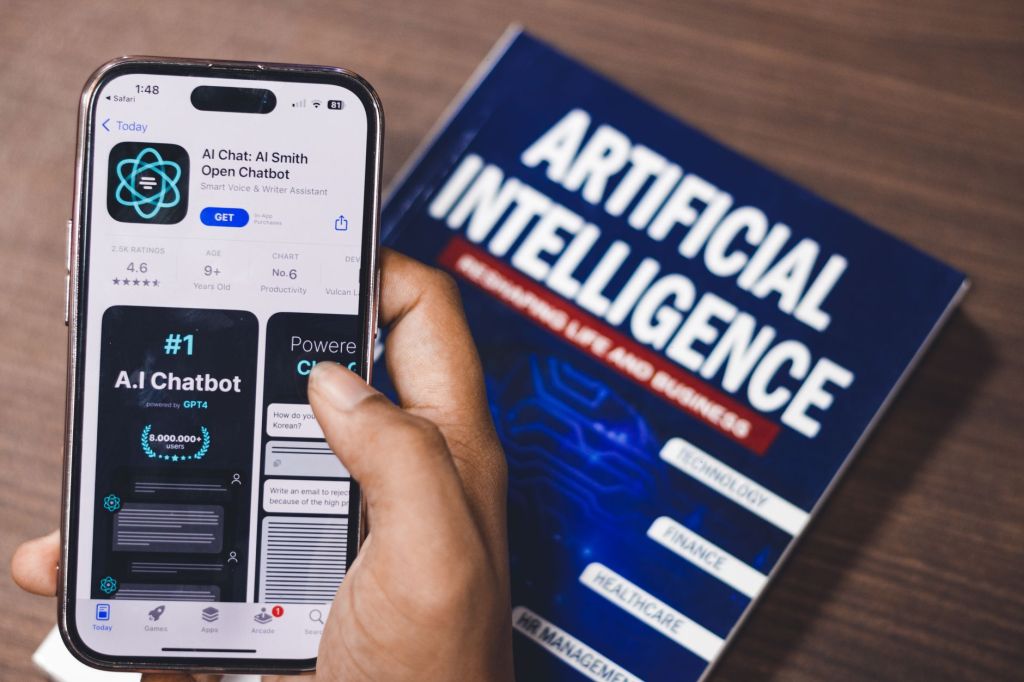
In our ever-advancing digital age it seems as though AI is everywhere: from kids cribbing their homework to scientific and medical breakthroughs. We also know [Biswas & Murray, 2025] that individuals are increasingly relying on AI for help with all life’s questions – including about mental health. And why wouldn’t you ask a seemingly friendly chatbot to help you improve your life? After all, it’s free, instantly available and anonymous.
Understanding the allure of AI, especially when it is being used as a substitute for therapy, is important for psychologists, who also want to increase awareness about the potential dangers. So what is the problem, and why is it a problem?
Therapy has become more accessible than ever, but unfortunately it is still a service which not everyone is able to benefit from – whether due to cost, availability, or the need for specialist help. For example, access to NHS mental health services can involve extremely long waiting periods. Han et al. (2026) found that, as of September 2024, over 350,000 young people were waiting for Child and Adolescent Mental Health Services (CAMHS), with a median waiting time of almost eight months and the 90th percentile exceeding two years. The study also found that some young people and their caregivers reported waiting months or even years for support, with one participant describing being on a waiting list for six years. These prolonged waiting times can leave individuals without timely professional support, potentially increasing the appeal of alternative sources of support that can be accessed immediately, such as AI. AI has never been easier to use. Compared to seeing a private clinical psychologist, which may cost anywhere from £90-£200 per hour,chatbots like Claude, ChatGPT and Copilot are available free of charge. You get instant answers, they never judge, and they validate whatever struggle you are going through (this is a feature of many AI’s, known academically as ‘AI sycophancy’ (Cheng et al., 2026). Also, it doesn’t hold you accountable, or challenge you, or have any of the nuance which a personal therapy relationship provides. In the long term this can actually have detrimental implications for mental health.
However, I would never shame those who use AI as a therapist. Most people, in moments of anxiety, distress or upset, will look for anything which might relieve those emotions – and with AI, relief (at least in the short term) is at your fingertips. So why wouldn’t you make use of it? In fact, AI can actually be a very powerful therapeutic tool. Being educated on how to use AI in a way which is helpful, and not unhealthy or harmful, is extremely important for everyone as it becomes more and more prevalent in our daily lives. So how can you make sure that AI is helping and not hindering your healing?
Firstly, learning about the real dangers of talking to a chatbot as if it were your therapist is extremely important. Knowing how to question the AI, how to recognise when it may ‘hallucinate’ ( literally make things up) and how to tailor it to be useful are all things you can learn.
So what is AI actually useful for? And how do we hope clients engage with it?
Well, artificial chatbots can be remarkably helpful for organising and processing difficult topics and thoughts when we struggle to do so on our own. While a therapist can help trigger these thought processes, AI can be useful to help recalibrate after a session, and logically talk through thoughts and explain mental health concepts. AI is also good at teaching coping skills, although it does lack the nuance needed for more complex psychological situations.
What should you be wary of when using AI?
The biggest issue with having AI as a therapist is the lack of nuance in its approach. Unlike a human relationship, an artificial intelligence is unable to consider all the key elements that affect a person’s cognition, such as their personality, key life events, family history and so on. An AI only knows exactly what you choose to tell it – and often a therapist will recognise traits in you which you can’t even recognise in yourself! Also, AI can’t pick up on other key details of human interaction, such as vocal changes, body language and facial expressions, all of which are key pieces of information in a therapeutic relationship. AI therapy offers a very ‘one size fits all’ approach, where what you really need from therapy can become lost among AI’s ‘general advice’. It cannot suggest different modalities and techniques to target your unique personal situation.
Never forget that AI can literally lie to you. One of the major issues with AI is that it can ‘hallucinate’: stating information as fact when actually it has made up the ‘fact’ without any evidence. Cheng et al. (2026) found that AI models frequently exhibited sycophantic behaviour, affirming users’ actions 49% more often than humans. This behaviour may make AI appear more supportive and trustworthy, potentially encouraging users to rely on AI for advice and emotional support. In some cases AI would use false information to validate, support and give meaning to prompts, even if the prompts were completely false in nature, or even harmful. At the extreme, there have been documented cases of ‘AI-induced psychosis’ – a phenomenon which seems to be increasing with the prevalence of artificial intelligence itself. Psychologists also maintain that AI can cause a phenomena known as ‘delusional spiralling’ by validation and infinite agreement, thus increasing the severity of preexisting mental health conditions, or prompting deterioration in otherwise mentally healthy people.
However there is hope for the future. If education around the dangers of AI improves, as well as education on using it safely (for example as in ChatGPT’s new customisation tools), then it may revolutionise how psychologists, counsellors and psychotherapists approach therapy.
This article was written by Evelyn Last
References:
Biswas, M., & Murray, J. (2025). “Incomplete without tech”: Emotional responses and the psychology of AI reliance. In M. N. Huda, M. Wang, & T. Kalganova (Eds.), Towards autonomous robotic systems: TAROS 2024 (Lecture Notes in Computer Science, Vol. 15051). Springer. https://doi.org/10.1007/978-3-031-72059-8_11
Han, E., Burton, A., Bradbury, A., Hayes, D., Wright, J., Sticpewich, L., Page, J., & Fancourt, D. (2026). Experiences of youth and caregivers waiting for mental health services in the UK: A qualitative study to inform policy and practice. European Child & Adolescent Psychiatry, 35(5), 1467–1477. https://doi.org/10.1007/s00787-025-02952-x
Cheng, M., Lee, C., Khadpe, P., Yu, S., Han, D., & Jurafsky, D. (2026). Sycophantic AI decreases prosocial intentions and promotes dependence. Science, 391(6792), eaec8352. https://doi.org/10.1126/science.aec8352


Leave a comment